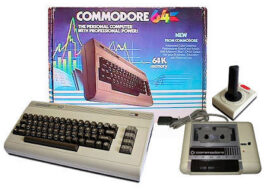
[{"content":{"location":"kirby","image":["file:\/\/D2QUtW3BsKzDNGd4"],"src":"","alt":"","caption":"Matt Mahon is the vice president of engineering for Schell Games. His responsibilities include managing the project programming teams, establishing workflow process, and overseeing the technical design of the projects.","link":"","ratio":"","crop":"false"},"id":"74eb37e3-4364-474a-a28b-f1132b72c72d","isHidden":false,"type":"imageBlock"},{"content":{"text":"What was your weirdest job before you started on the path that got you where you are today?<\/strong><\/p>Sure. So, during the summer between my sophomore and junior years of college, I got a job - clearing power lines. I\u2019d have to get up at ungodly times, like 4:30 a.m., go into the office, and drive to some power lines somewhere. And then we\u2019d strap these enormous devices onto our backs that had tanks filled with herbicides. I don\u2019t even know what we were spraying. They had a gas blowers on them, too.<\/p>Seriously?<\/strong><\/p>Yes. If you\u2019re driving down the highway and see those power lines that look like they are shooting off into the sunset, I was clearing those kind of lines. So yes, it was by far the weirdest job I ever had.<\/p>Wow. From that experience, do you have any takeaways from it? Any lessons learned that you may have adopted?<\/strong><\/p>I think the argument could be made about building a kind of camaraderie with the people you are working with. Especially since that job wasn\u2019t exactly fun. We showed up, we knew we had a job to do, and we powered through it.<\/p>Interesting. So what brought you into the video game industry?<\/strong><\/p>Well, I have always liked video games. I originally had an Atari, and later I talked my parents into getting me a Commodore 64<\/a>. One of the caveats from my parents was- since it was relatively expensive- that I needed to learn and do more stuff with it than just play games. And that meant learning programming.<\/p>"},"id":"3692aeec-0e25-44cf-8d2f-190ab04d864b","isHidden":false,"type":"textBlock"},{"content":{"location":"kirby","image":["file:\/\/diADQjTGYREKiXIX"],"src":"","alt":"","caption":"Matt first got into programming when his parents got him the Commodore 64","link":"","ratio":"","crop":"false"},"id":"f1580e00-97e3-4c01-8c1a-bcf28b47e29c","isHidden":false,"type":"imageBlock"},{"content":{"text":"Cool.<\/strong><\/p>They were excited at how I was able to manipulate data and code, and get objects to appear on the screen. Then in college, I knew that I wanted to do programming of some sort. I graduated college with a double major in computer science and math from Assumption College. But then it was \u2019how do I get into games<\/em>?\u2019 Keep in mind, this was the early 90\u2019s, and there weren\u2019t the type of game programs that there are now. I mean, I took zero classes specific to game programming. I did a lot of the learning on my own, taking information from different books and magazines. The career of a \u2018game programmer\u2019 was really abstract. I knew that people could do it, but I didn\u2019t know how. I ended up answering an ad in a newspaper for an entertainment company called Humongous Entertainment<\/a>.<\/p>No way?<\/strong><\/p>Yes. They called me back and I got the job. I had other job applications out there, but this was the offer that came back. I was doing tax software at the time, so I was able to make the jump from programming tax software to making video games.<\/p>It was a nice change.<\/p>Yes, I bet! Game design and engineering sounds a little more interesting. From there, what brought you to Schell Games?<\/strong><\/p>We were thinking about moving back to the east coast from Seattle to be closer to family. During that time, I found out that my brother-in-law in Pittsburgh was working at Carnegie Mellon<\/a>. He got me into contact with Jesse [Schell]<\/a>. We exchanged a couple of emails, had a call, and later, when I was in Pittsburgh on a family visit [my wife is from Pittsburgh], I stopped by to see the studio, had an interview and it went well. Everything lined up, so we packed up from Seattle, and moved out.<\/p>Good deal. With your experience being in the video game industry for a while, you see that it is changing pretty rapidly. From where the video game industry is now, at this moment, where do you see it going in the next five or so years?<\/strong><\/p>Now that is a super hard question, and I wish I had a smart answer for it. In reality, I don\u2019t know. It is all changing so fast. If you would have asked me five years ago if I thought Schell Games would be so focused on VR (virtual reality), I would have thought you were crazy. To me, it is less about where I think the industry is going, and more about staying open to opportunities as the industry moves along.<\/p>Okay, that makes a lot of sense.<\/strong><\/p>That\u2019s the great thing about Schell Games. We don\u2019t get married to one single technology, one single style of game or platform, and we\u2019re willing to try a lot of different things. We\u2019ve built a reputation that people would say, \u201cWell, that\u2019s a weird idea\u201d or \u201cThat\u2019s a weird piece of technology. Let\u2019s see what Schell Games can do with it.\u201d It has served us well, because we are able to jump on whatever new exciting technologies crop up.<\/p>Since I started at Schell Games, we\u2019ve transition ourselves three or four times. One of my first projects was Pixie Hollow<\/em>, a flash-based, MMO for kids. At the time, flash-based and MMOs were super hot. We probably did three or four of those projects. Then as flash development cooled down, we started using the Unity platform, went hard into tablet games like Lexica<\/a>,<\/em> and we did a few more mobile games. Now, though we still dabble in mobile games, we\u2019re very focused on VR. I\u2019m not even talking about the work we do with theme parks and other location-based games.<\/p>As for our VR development, we worked on I Expect You To Die<\/a><\/em> for about two years. And even before that, we had some experiments on the DK1 VR headset, when it was on Kickstarter<\/a>. So our ability to experiment with things like VR and other technologies is pretty cool.<\/p>Cool. Have any experiments helped Schell Games recently?<\/strong><\/p>Absolutely. We\u2019ve been playing with the HoloLens<\/a>, and have been discussing what type of experiences could be done well for that technology. Tango is also a good example. We sent a couple of devs to Google\u2019s campus for a tech\/game jam-type of workshop. On Tango, we experimented with creating a Jenga game, and Google loved it. They had us go back, clean it up a little bit for CES<\/a>, and that experiment led directly to our Domino World<\/a> <\/em>game.<\/p>"},"id":"02a12a17-1266-4728-9cc0-cb2e055aa9b0","isHidden":false,"type":"textBlock"},{"content":{"url":"https:\/\/youtu.be\/GV8NuGcOu1w","caption":""},"id":"4e3db319-6c2b-4952-880c-f0d82fb6caaf","isHidden":false,"type":"videoBlock"},{"content":{"text":"What do you like about working for an indie studio in general, and Schell Games specifically?<\/strong><\/p>We have a great group of people here and it means a lot. I like the fact that we do a lot of different things. We\u2019re not on an assembly line, making the same game over and over again. Although, don\u2019t get me wrong, I\u2019d love to have a hit franchise.<\/p>Of course.<\/strong><\/p>There is something very compelling about the variety of tasks and challenges here. As far as an indie studio, it is kind of the same thing. We\u2019re a \u2018big\u2019 small company. It\u2019s a tough industry though. You see other studios laying off staff, and studios going out of business and closing down. For Schell Games, we\u2019ve been able to keep this thing going for nearly 15 years.<\/p>That\u2019s a real feat.<\/strong><\/p>The fact that we\u2019ve been able to make it this long, without any major layoffs or big \u2018scale-downs,\u2019 is atypical for our industry. And it goes back to Jesse, because he really cares about the people. He\u2019ll make choices that will defend the people of Schell Games, not just defending the business of Schell Games. And sometimes it\u2019s a hard balance, because there are cases where those goals don\u2019t align. Sometimes it would be easier to lay people off, but we try to get the best group of people, grow them, and keep them.<\/p>"},"id":"104c9dc4-aa0c-47a8-9450-3dece987a85c","isHidden":false,"type":"textBlock"},{"content":{"url":"https:\/\/youtu.be\/8BBi7mj97wM","caption":""},"id":"3ea56541-1b15-4763-ac0b-b410f94a1140","isHidden":false,"type":"videoBlock"},{"content":{"text":"You mentioned that with the diversity of projects and things that you are working on, there are challenges. How do you stay on top of your craft and your discipline while managing your team?<\/strong><\/p>Yes, it is really hard to maintain excellence in your craft when you are a full-time manager. I would like to say that I program all the time on my own. In reality, I do a little bit, but it\u2019s not enough to keep up with the people who are doing it full-time. For me, it\u2019s about reading, going to conferences, and learning and absorbing as much as I can. I need to be aware of what\u2019s out there; to understand concepts rather than implementations; to know what things are trending; and to learn what people have tried, succeeded and failed at. The most important thing for me now is to be able to recognize talent. It\u2019s much more important that I can identify a good programmer than be a good programmer. I have to put people in the right spots. That\u2019s my job. If I can assemble teams that work well together and build great content, I\u2019ve succeeded.<\/p>Right. Makes sense.<\/strong><\/p>You want to be able to hire people smarter than you. Hire smart people and put them in the right place to succeed. If you do that, everything gets easier.<\/p>Excellent. When you got onto the management track, what concepts or lessons did you have to learn on the job? Or were there things about leadership you didn\u2019t know before you got into a leadership position?<\/strong><\/p>Yes, there are a lot of lessons. I have been in leadership positions for quite a while, from project direction to studio leadership. Going back to one of the studios I was at before Schell Games, I had a very good engineering manager. I thought she was interesting because she was not a programmer. I had her as a manager and she was incredibly transparent, saying, \u201clook, programming is not my thing, but I\u2019m here to help manage the department.\u201d She would focus on team interactions, professional development and career paths, and she would solicit feedback from others to understand if a person was a good engineer, or not.<\/p>Very interesting.<\/strong><\/p>It is something that I have always taken with me. The person managing you on a project should not be the one managing your career. Project goals and career goals often don\u2019t align. If someone said \u201chey, I want to learn this new thing\u201d or \u201cI\u2019m a little tired of database stuff, I want to do something different,\u201d career-wise, it makes sense. If your project manager had to make that choice, it is a much harder sell because that manager is looking at the health of the project, not the health of your career.<\/p>That\u2019s a good point.<\/strong><\/p>Normally that tension is going to be there. Being able to manage it is something that I picked up.<\/p>Early on, when I was starting as a Technical Lead, I was often the best programmer on the team. The first thing I had to learn was, it doesn\u2019t matter how good a programmer you are, you\u2019re not going to be doing more programming work than the five people underneath you. It\u2019s not important that I\u2019m busy programming, it is important that they<\/em> are busy programming, and then I fill in where I can.<\/p>You have to set them up for success, and let them leverage your knowledge to make them more efficient. It is more important than me pounding out code.<\/p>"},"id":"5f2cb54f-af6d-446e-a2ad-27e190f22348","isHidden":false,"type":"textBlock"},{"content":{"location":"kirby","image":["file:\/\/WqfW2dw5IhjFEdE5"],"src":"","alt":"","caption":"Matt with the IEYTD Design and Technical Directors for VR game 'I Expect You To Die'","link":"","ratio":"","crop":"false"},"id":"2b1eb7cd-51ab-4015-bf38-f2820e8a430a","isHidden":false,"type":"imageBlock"},{"content":{"text":"Yes, I see that.<\/strong><\/p>As responsibilities increase, being open and honest with people becomes very important. You learn that hiding from a difficult conversation isn\u2019t going to help. Have those conversations. Be very forthright. You get your credibility from how you follow through on things. If I say \u201cokay, I\u2019ll take that up with the VP group,\u201d close the loop. Even if the answer is no, I could close the loop by saying, \u201cHey, we tried to get the extra staff, but we can\u2019t do it for \u2018x,y,z reason.\u2019 I realize the project is difficult, here\u2019s why we\u2019re doing it this way and why this supports the studio. I will work with you to get through this issue.\u201d<\/em><\/p>If you don\u2019t follow through, close those loops, and do what you said you were g\ufeffoing to do, you lose that credibility.<\/p>All very good points. Where do you think Schell Games is going to be in five years?<\/strong><\/p>It\u2019s hard to say. As a manager, I go through all the scenarios, right? The worst case, the best case, nothing is out of the range of possibilities. So, for the sake of argument, the worst case scenario is that we stay \u2018as is,\u2019 which wouldn\u2019t be a very bad case for us. We keep some level of work, a level of internal projects, and level out. But I can easily see us doubling in size in five years. We put ourselves in the position where we have one of the top titles in VR in I Expect You To Die.<\/em> If somebody mentions VR games, our game comes up. It\u2019s a good place to be.<\/p>"},"id":"afb1a840-6615-4ce5-b52d-255f7537de76","isHidden":false,"type":"textBlock"},{"content":{"url":"https:\/\/youtu.be\/ht1ZChKF4Ek","caption":""},"id":"51ca4cf5-3bb0-4e81-9290-e0bb6232b501","isHidden":false,"type":"videoBlock"},{"content":{"text":"It\u2019s definitely in the upper-echelon, for sure.<\/strong><\/p>Right. Thinking back to when CD-Rom games were new, sales for these games started very slowly, and then took off. Myst<\/a><\/em> was a huge beneficiary of that trend. The place where we want to be is the \u201cMyst<\/em> of VR.\u201d 7th Guest<\/em> was a step down from Myst<\/em>, but still a hugely successful game. We can be at that same level with I Expect You To Die<\/em>. It would really do a lot for us.<\/p>When you are thinking about the future, what do you think is unique being a part of a leadership team like the one at Schell Games?<\/strong><\/p>I\u2019m not sure if it\u2019s unique, but I feel we spend a lot of time thinking proactively about company processes, and how they relate to the games we\u2019re trying to build. We\u2019ve grown from 12 employees to over 100 since I\u2019ve been here. While not perfect, I feel we\u2019ve avoided a lot of pitfalls along the way. As a result, the teams have been able to focus on making great games.<\/p>"},"id":"e4a064f2-fcc1-4343-a21c-1a6ac6e1a619","isHidden":false,"type":"textBlock"},{"content":{"location":"kirby","image":["file:\/\/Pto4VsWgR7gOxHR5"],"src":"","alt":"","caption":"Happy Atoms, a digital and physical chemistry modeling set, is one of the many projects the studio developed in 2016","link":"","ratio":"","crop":"false"},"id":"60e80dee-9429-4b66-9f44-b32e335e0a04","isHidden":false,"type":"imageBlock"},{"content":{"text":"What\u2019s your favorite video game? (that you\u2019ve played, or admire for its design, art, etc.)<\/strong><\/p>I\u2019m going to go with The World Ends With You<\/a>.<\/em> It was a DS title, and was a weird, little game about collecting and battling with pins. It had a cool mechanic and an interesting story. I played it for a looooong time trying to get 100% complete. I think I still have one pin to get.<\/p>What advice do you have for people trying to get into the video game industry?<\/strong><\/p>First, make stuff. Either with friends or solo. Your early stuff will be bad, and that\u2019s okay. Focus on the learning. Try and build something you can show. Secondly, learn some code. Even if you don\u2019t intend to be an engineer, knowing a little code will give you a lot of freedom.<\/p>Last question: What, in your opinion, makes the leadership team at Schell Games, click?<\/strong><\/p>We\u2019ve been together for a long time. With the battles we\u2019ve faced as a team, we\u2019ve built a sense of trust amongst each other. Keeping this company going is a lot of work. We have open communication with each other and are not afraid to talk to each other. Longevity and stability have served us well.<\/p>"},"id":"2f1e3df1-9eec-4f67-b428-163aa917db35","isHidden":false,"type":"textBlock"}]